In his final quarter as CEO of Berkshire Hathaway ( NYSE: BRK-B), Warren Buffett reallocated his technology holdings. In the process, he sold 75% of his Amazon (NASDAQ: AMZN) position, according to Bloomberg. He has held the stock since 2019. Buffett also reduced his investment in Apple ( NASDAQ: AAPL | AAPL Price Prediction), a move he has made for several quarters. Like many of the world's largest investors, Buffett does not always provide a rationale for buying or selling a stock.
Linthicum has also taken serverless to task. "Serverless technology will continue to fade into the background due to the rise of other cloud computing paradigms, such as edge computing and microclouds," he says. Why? Because these "introduced more nuanced solutions to the market with tailored approaches that cater to specific business needs rather than the one-size-fits-all of serverless computing." I once suggested that serverless might displace Kubernetes and containers. I was wrong. Linthicum's more measured approach feels correct because it follows what always seems to happen with big new trends: They don't completely crater, they just stop pretending to solve all of our problems and instead get embraced for modest but still important applications.
The crypto market is no longer being dictated by speculation and trends of trading in the short run. With the evolution of digital assets, investors demand more structured, data-driven and technology-supported strategies that are more stable, transparent, and have long-term potential. With all these changes, platforms with built-in artificial intelligence, cloud computing, and high-end hashing infrastructure are altering the way crypto participation operates.
Agentic AI can change how companies perform operations and how individuals access information. This technology can provide relevant information sooner and complete basic tasks. Right now, this technology is the worst that it will ever be. As agentic AI gets better, demand for these solutions will grow. These three stocks are poised to benefit from this growing industry. Amazon (AMZN) Amazon ( NASDAQ:AMZN) offers the largest cloud platform, and that technology acts as the backbone for agentic AI.
To explain why, Levie pointed to economist William Stanley Jevons. In 1865, Jevons observed that more efficient steam engines didn't curb coal use in England but drove it higher, as cheaper energy fueled new industries - a dynamic now known as the Jevons paradox. Levie said the same pattern has repeated itself in computing, with each major wave of cheaper technology - from mainframes to minicomputers to PCs - dramatically expanding adoption.
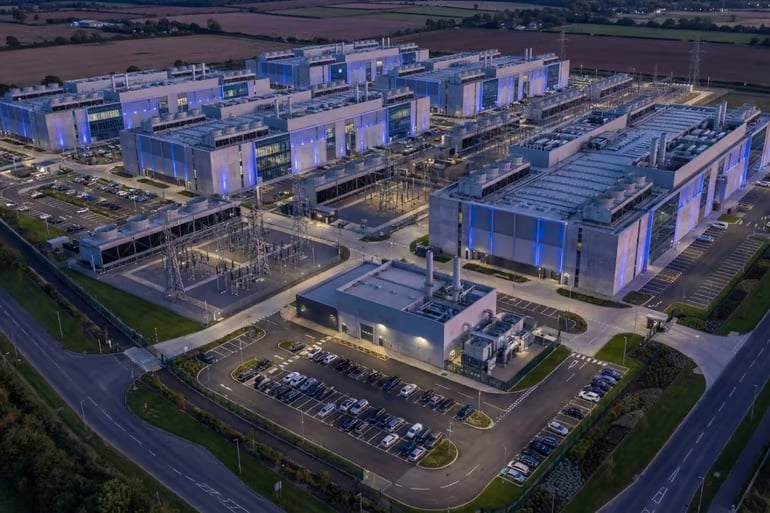
When Sam Altman said one year ago that OpenAI's Roman Empire is the actual Roman Empire, he wasn't kidding. In the same way that the Romans gradually amassed an empire of land spanning three continents and one-ninth of the Earth's circumference, the CEO and his cohort are now dotting the planet with their own latifundia-not agricultural estates, but AI data centers.
Alphabet is best known for Google, which is the most dominant search engine on the planet. Google commands an approximate 90% market share in search, in large part due to the distribution advantages it has. The company owns both the world's leading web browser in Chrome and the No. 1 smartphone operating system in Android. Alphabet also has a search revenue-sharing deal with Apple to be the default search on all its devices.
Amazon is in early discussions to invest as much as $10 billion in OpenAI in a deal that would see the AI lab using the e-commerce giant's AI chips, CNBC reported. If it materializes, the deal would value OpenAI at more than $500 billion, Bloomberg reported, citing an anonymous source. Amazon has been looking to diversify its bets in the AI race, which has so far seen it partner up and invest $8 billion in Anthropic, a rival to OpenAI.
Long-term investing offers many benefits, including tax advantages, compounded returns, and the ability to disregard short-term market fluctuations, which can cause stress and lead to panic selling. These advantages obviously work optimally when investors pick the right stocks to put their hard-earned money in. And with hundreds of choices, it can be challenging to separate those that are worth serious consideration and those that aren't.
The CEO of the Chinese tech giant, Eddie Wu, said on Alibaba's second-quarter earnings call on Tuesday that the company "doesn't really see much of an issue in terms of a so-called AI bubble." "We're not even able to keep pace with the growth in customer demand," Wu said, adding that the pace at which Alibaba can deploy new servers is insufficient. "In the next three years to come, AI resources will continue to be under supply," he said.
Once upon a time, when you ran Windows on your desktop, it was your desktop. Oh, the IT department might have called the shots on how much you could do with it, but you could write what you needed to, and it was all kept nicely on your PC or your choice of network drive. Those days are long gone.
US research firm Gartner predicts that IT spending in Europe will increase by 11% to a total of $1.4 trillion in 2026. Growth is expected to be driven by AI, cloud computing and cybersecurity, despite limited IT budgets and few new hires. Spending on generative AI is expected to grow by 78%, while cloud investments will increase by 24% as companies increasingly move services to Europe for sovereignty reasons.
The big worry centers on GPUs, the chips needed to train and run AI models. As new GPUs come out, older ones get less valuable, through obsolescence and wear and tear. Cloud companies must use depreciation to reduce the value of these assets over a period that reflects reality. The faster the depreciation, the bigger the hit to earnings. Investors have begun to worry that GPUs only have useful lives of one or two years,